
Finding Fayetteville Residents Wisely
Smart searching in a Fayetteville residents directory means matching the question to the record. Address questions fit the Washington County Assessor roll best. Name questions can start with an owner search, VoterView, or Search ARCourts. Curious about past residents of a Fayetteville household? Old city directories, census schedules, newspapers, and the county land index hold those clues. Each source captures a different role. Owners, registered voters, deed parties, court participants, and directory householders should never be treated as one interchangeable crowd. A student at the university may show up in a yearbook yet hold no local parcel. A deed signer can just as easily live out of town.
Keep notes as you go. Record the exact spelling, date, role, parcel number, case number, or book and page each source gives you. Two matching facts beat one shared name every time.
- Start with the known name or street address in the county property roll.
- Separate the physical situs address from the owner's mailing address.
- Check voter or court records only with the identifiers lawfully available.
- Follow deed parties, business filings, or license records when they fit the question.
- Move to library and archive collections for an older Fayetteville trail.
Fayetteville Residents Records District
Four record stops cluster near downtown Fayetteville, the Washington County seat. The four stops are City Hall, the courthouse, County Archives, and the public library. Each holds a piece of the picture. The Circuit Clerk files deeds, liens, plats, and circuit court material. At the Assessor's office, a parcel number unlocks everything. It opens the door to the owner, situs, mailing address, legal description, and assessed value. Voter registration and marriage licensing run through the County Clerk. Older land, court, probate, marriage, tax, school, and community records sit in the Archives.
Indexes on the web are just one channel. Counters at the courthouse, phone help, mailed copy requests, the city FOIA portal, and the library's research service all fill gaps. They help when an index lacks an image. The same channels cover older records that get skipped. For the full address chain, use the Fayetteville street directory.
Washington County Circuit Clerk
280 N. College Ave., Suite 302
Fayetteville, AR 72701
479-444-1538
Washington County Assessor
280 N. College Ave.
Fayetteville, AR 72701
479-444-1500
Washington County Clerk
280 N. College Ave.
Fayetteville, AR 72701
County courthouse
Fayetteville Property Directory Clues
For an address-to-owner step in the Fayetteville residents directory, the DataScout parcel roll is usually fastest. It searches by owner name, property address, parcel number, subdivision, or rural section, township, and range details. A parcel is the county's mapped unit of land. The situs address marks the physical location. The mailing address is where tax notices go. The two can differ, especially for an absentee owner or an entity.
| Property search field | Input | Best use |
|---|---|---|
| Owner Name | Surname, business, initials | Find parcels tied to a known owner |
| Property Address | Street number and name | Reach the situs and parcel card |
| Parcel Number | County identifier | Keep the same land unit through other systems |
| Subdivision | Name or selection | Compare lots within one recorded plat |
| Section/Township/Range | Land-grid terms | Locate rural-edge or older tracts |
A parcel card adds legal description, values, sales history, deed references, building facts, and a map link. It still proves ownership, not residency. Save the parcel number and legal description before moving on.
Current Fayetteville Resident Directory Sources
Several official lists serve as partial Fayetteville resident rolls, and the right one depends on the role being tested. DataScout handles ownership well. VoterView confirms an individual registration when the required personal data are known. Search ARCourts locates public case metadata. Recorder indexes tie named parties to land instruments. City tools round things out with address points, permits, licenses, wards, and neighborhood organizations.
| Official source | Role recorded | Keeper | Access route |
|---|---|---|---|
| Property roll | Parcel owner | County Assessor | DataScout or office |
| Voter record | Registered voter | County Clerk and state | VoterView or lawful list request |
| Land index | Grantor or grantee | Circuit Clerk and Archives | Current index, archive index, or counter |
| Court docket | Named case participant | Local court clerk | Search ARCourts and clerk file |
| City record | Applicant, contact, official | City departments | Civic Access, staff directory, or FOIA |
Note: No single source counts as a full household census, so match a role and a date before drawing any conclusion.
Fayetteville Voter Directory Boundaries
Arkansas VoterView asks for a first name, last name, date of birth, and county. It verifies one voter at a time. It then returns election-facing facts: status, precinct, polling place, districts, and a sample ballot. It is not built to browse a street. A failed match does not prove someone left Fayetteville either.
For a lawful street or precinct study, request the proper extract. Do so through the Washington County Clerk or Election Commission. Arkansas law requires computerized county lists to carry at least names, addresses, and precinct numbers. Secure-voter addresses stay suppressed. Arkansas registers no voters by party, and participation data never reveal ballot choices. The official form appears in the VoterView verification screen.
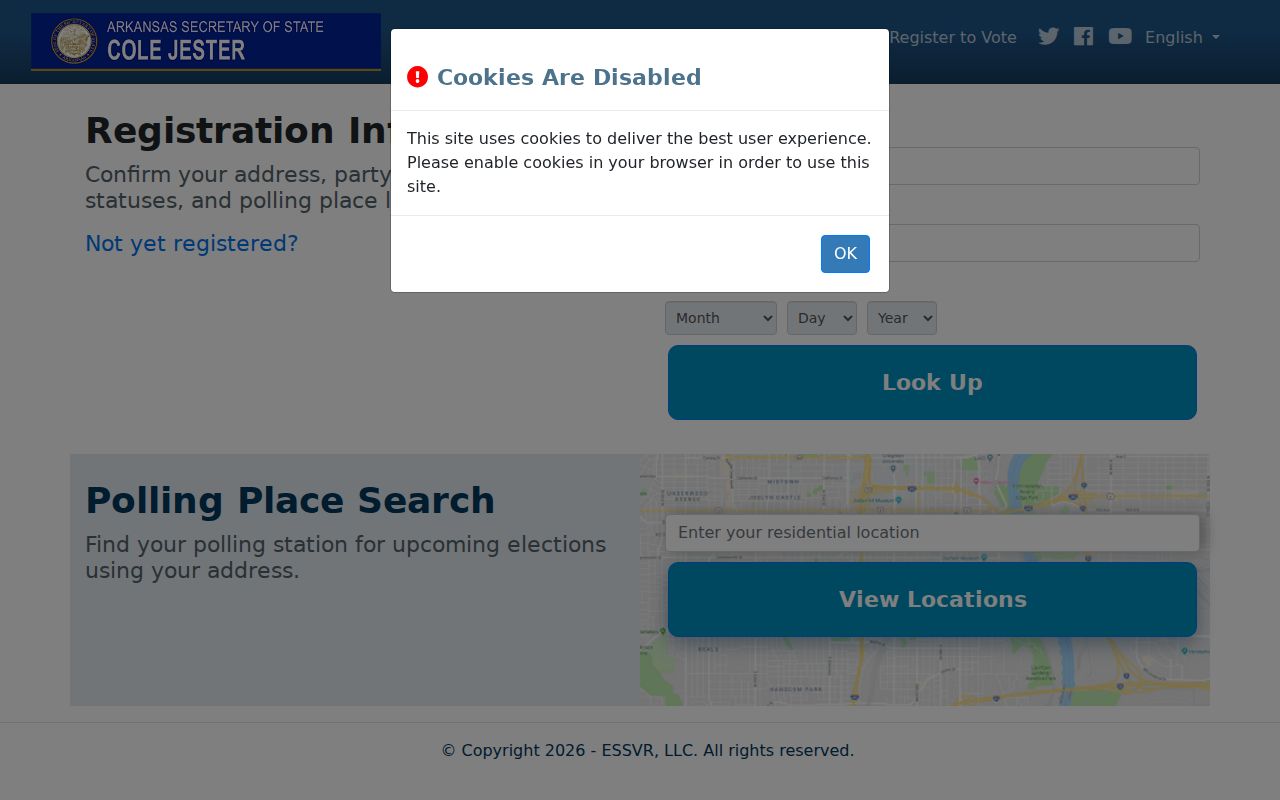
That screen shows why one-person verification and a county list request are two different access paths.
Note: Secure-voter addresses must stay out of any Fayetteville directory notes, exports, or shared research files.
Fayetteville Court Record Lookup
Search ARCourts is the statewide public docket index. It covers Washington County circuit cases and Fayetteville District Court matters. A participant search takes a first name plus last name or organization keywords. Advanced filters include date of birth, county, and court location. A docket lists the dated filings and events in a case, and the index may show party roles, filing date, case type, status, hearings, disposition, and published document links.
Match at least two facts before joining a court name to a Fayetteville resident. The local clerk controls the official files and certified copies. A certified copy carries the custodian's formal authentication. Juvenile, adoption, sealed, and other protected matters may be absent or limited. The Search ARCourts participant screen shows the live public starting point.
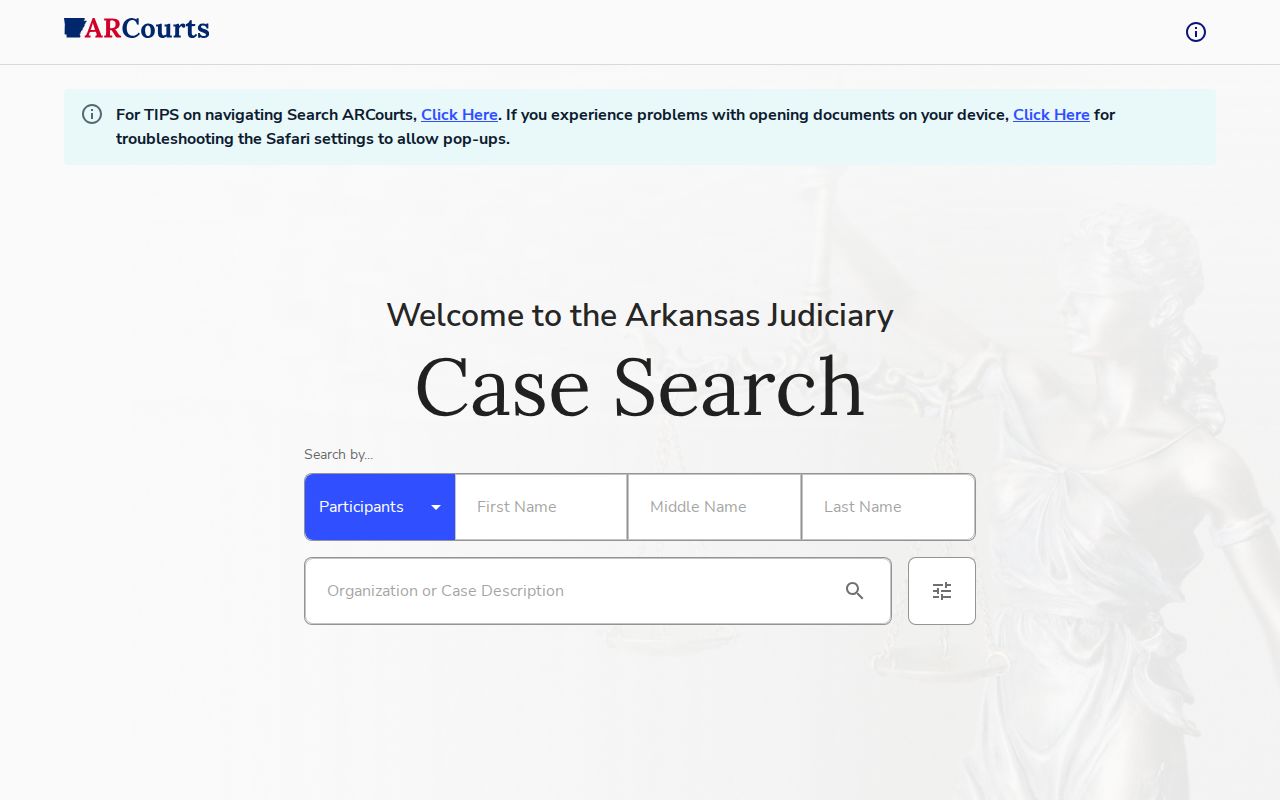
Treat the screen as a locator only. Then ask the correct court clerk about the file, copy process, and current access limits.
Fayetteville Deeds Cross 1991
Deed research in Fayetteville spans two eras. The Washington County Archives land database reaches back to 1834 and runs through 1991. The current indexed land and lien system takes over from 1992 forward. A few terms help. A grantor conveys or encumbers an interest in the property, while a grantee receives it or stands in as lender or beneficiary, depending on the document type. Always search name variants, initials included.
The modern index allows searching by party name, document number, book and page, document type, and a recording-date range. The archive database adds controls for grantor or grantee, record type, year, book, page, and index terms. An index hit is only a pointer. Pull the image or volume for the legal description, signatures, acknowledgment, preparer, and return address. For gaps, call the Circuit Clerk, visit its weekday counter, or use County Archives on Wednesdays. Mailed requests are documented too.
- Index
- A finding aid that points to a filed record.
- Parcel
- A mapped county land unit with its own identifier.
- Criss-cross directory
- A volume arranged by street and house number instead of surname.
- Roll
- An official list created for a defined public task, such as assessment or voting.
Fayetteville City Records Since 2020
Fayetteville Civic Access is the city's address-keyed workhorse. Per city guidance, records created since roughly 2020 are likely searchable there. That covers permits, plans, business licenses, code cases, certificates of occupancy, and inspections. Start with the street number and name, then pick an autocomplete suggestion. Keep Exact Phrase when you want a single address. Select the record type from there. Results can be filtered, and the blue record number opens details or any attachments.
Older records and missing attachments have a clear fallback. Development Services answers questions by phone or email. The Fayetteville FOIA portal accepts and tracks requests. Inspection is available during city business hours. Name the record, the date span, and the format. That works better than asking staff to research open-endedly. The city's open-government instructions display those routes.
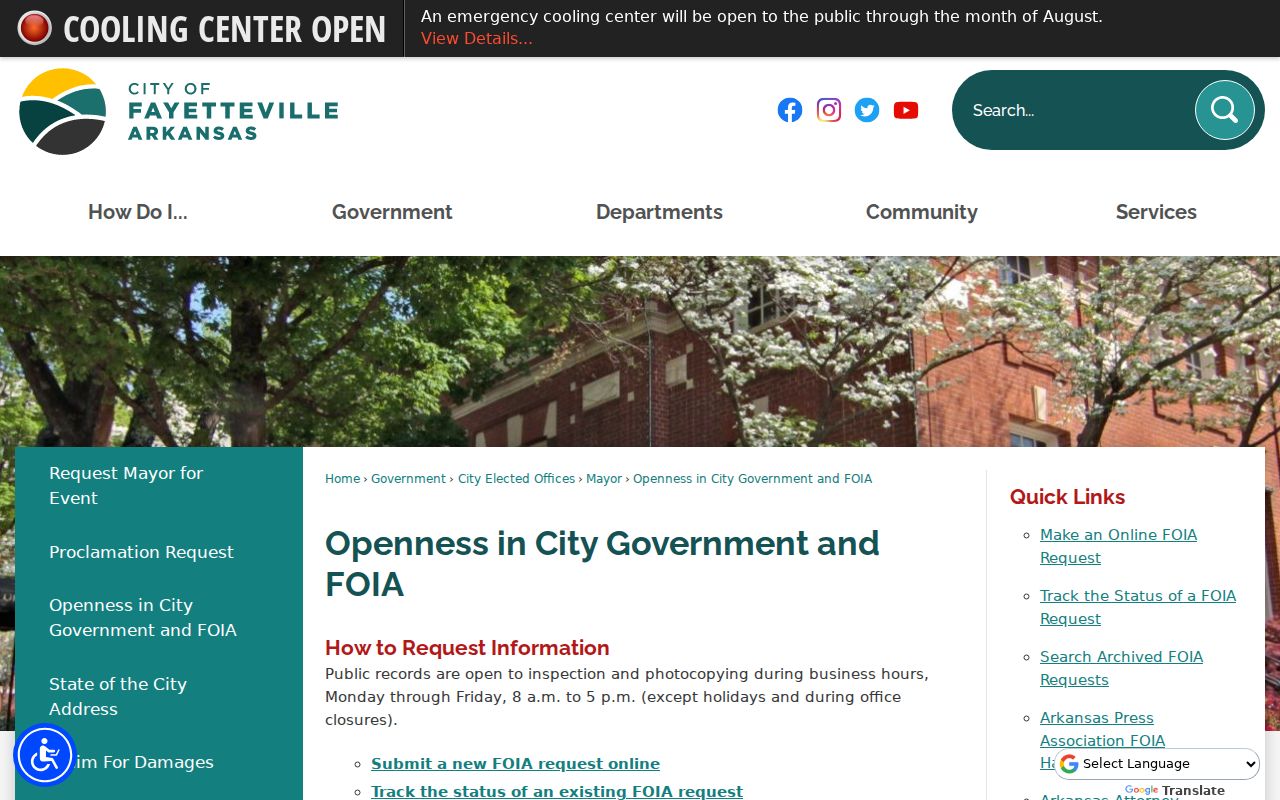
This source bridges the gap when a searchable city index stops short of the record you need.
Historic Fayetteville Residents Directories
The Fayetteville Public Library's Grace Keith Genealogy Collection is a directory researcher's dream. It holds more than 14,000 print resources, plus microfilm, maps, digital images, surname files, yearbooks, newspapers, and an in-library obituary database. Fayetteville city directory runs include Stewart & Weeks, C.D. Shumaker, Interstate Directory Company, and long stretches of R.L. Polk. Telephone directories and University of Arkansas student directories add thinner but still useful clues.
Know which kind of volume you hold. An alphabetical city directory finds a person by name. A reverse volume works from the street and house number. Entries can list a spouse, occupation, employer, home address, business address, or telephone, and each volume's abbreviation key governs the meaning. The Fayetteville city directory collections carry the full shelf and year-by-year method. The Grace Keith collection overview shows the range of local research help.

Print, microform, and staff help combine here. The library works as a true directory desk, not merely a shelf of books.
Fayetteville Vital Record Routes
Vital certificates and historical clues travel different roads. The Arkansas Department of Health handles eligible birth, death, marriage, and divorce orders online, by phone, by mail, and at its counter. Identity, relationship, and record details are required. Births open to the public after 100 years. Deaths, marriages, divorces, dissolutions, and annulments held by the state open after 50 years, once the requester supplies enough identifying facts and pays the normal fee.
Genealogy work often starts elsewhere in Fayetteville. Washington County Archives keeps a marriage index covering 1845 through 1941. The Fayetteville Public Library adds newspapers, cemetery sources, probate records, and the obituary database. Divorce decrees and pleadings sit with the Circuit Clerk, and an ADH divorce coupon confirms the event and county without being the court file itself. For pre-1914 births or deaths, test church, cemetery, family, newspaper, probate, and delayed-registration records.
Fayetteville Business Directory Leads
A person's public business role can supply a second dated clue. The Arkansas Secretary of State entity index may list an entity name, status, registered agent, filing address, and filing history. City business-license or permit records may add a local address and a record date. Professional credentials start with the Arkansas.gov roster and continue at the issuing board.
Read addresses with care. A registered-agent address is a service address, not proof of residence. The same caution fits a license business address. Compare these details with a parcel, deed, or other public filing only when dates and roles line up. The Arkansas business entity search illustrates the official name-search route.
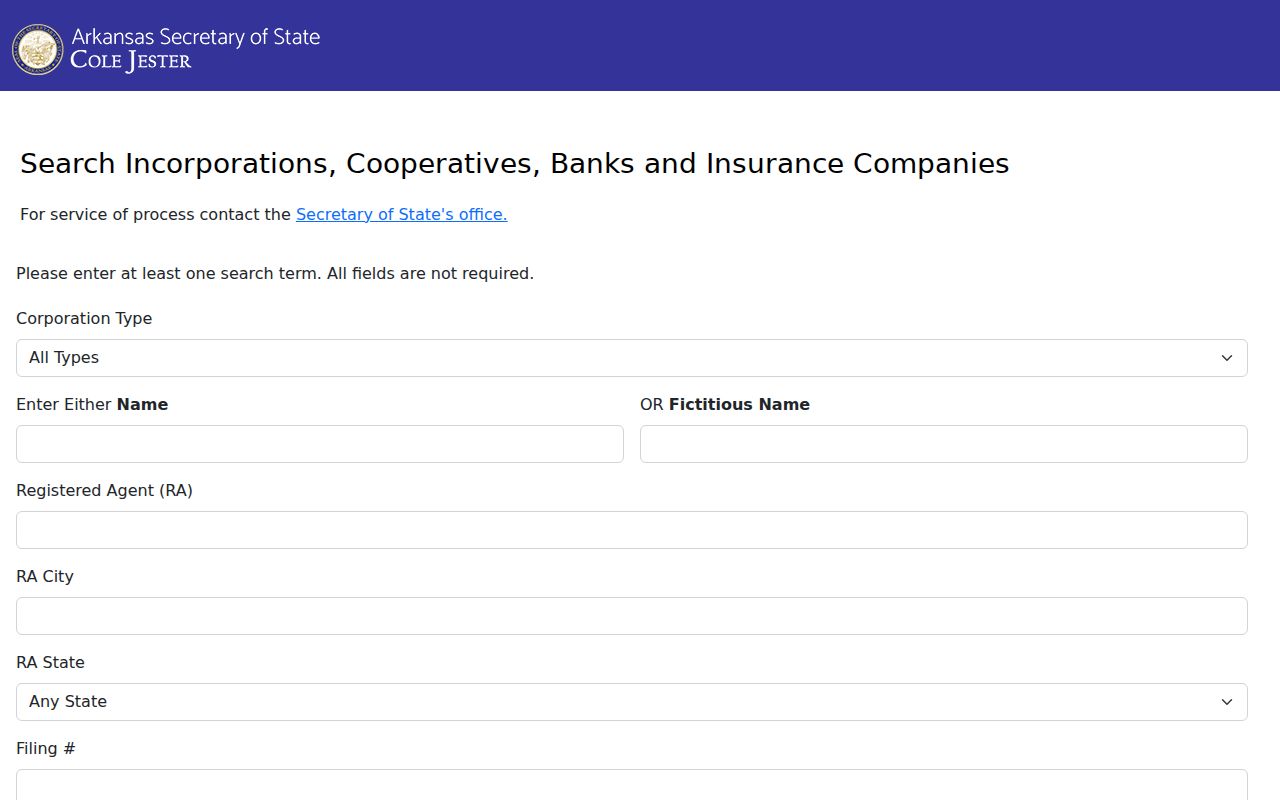
Treat any hit as evidence of a filing role first, then confirm it against another Fayetteville record.
Official Fayetteville Directory Evidence
Official records and commercial people-finder sites serve different purposes. Government indexes name a role, a custodian, and a record date. Commercial compilations merge public and private feeds, so stale addresses and similar names can collapse into one profile. Use them as leads; they are not certified records.
| Point | Official roll or index | Commercial compilation |
|---|---|---|
| Keeper | Named public office | Private compiler |
| Role | Owner, voter, party, applicant, or licensee | Often blended into one profile |
| Correction | Ask the source custodian | Use the provider's removal or dispute process |
| Proof | Index plus official copy when needed | Unverified lead |
Lawful use. Fayetteville records may be used for lawful personal research. Never use a directory trail to stalk, harass, threaten, trespass, or defeat a protected address.
Fayetteville Records Survived War
Washington County's early records owe their survival to a quick move. Officials acted ahead of the 1862 courthouse fire. They carried the files to Fincher's Cave near Black Oak. The county's own history credits that step with saving early nineteenth-century papers. Because of that, the Archives can trace probate from 1830. Land records start in 1834. Court material begins in 1835, and marriage in 1845.
That continuity shapes what a Fayetteville residents directory search can reach. A pre-Civil-War family or parcel trail may still exist. Much of it, however, takes book, microfilm, file, or counter work rather than a full-text web search. The first courthouse was a small log building. Storage pressure grew over time. It eventually led to the creation of Washington County Archives in 1997 and its merger with custodial staff in 1999.
Note: County Archives is open to the public on Wednesday from 9 a.m. to 3 p.m., with a noon-to-1 p.m. closure.
Fayetteville Directory Geography Check
A Fayetteville postal address does not always prove a parcel sits inside the city. USPS answers mail-delivery questions only. The city E-911 Address Coordinator assigns local addresses and units. Use My Fayetteville Services to confirm city-limit status, ward, schools, zoning, flood data, services, and neighborhood organization. The Assessor and parcel map establish the land unit itself. A plat or deed then supplies its legal description.
Work in that order whenever the systems disagree. A 72704 situs can coexist with an out-of-state owner mailing address. A Fayetteville postal label can be true at once for a single parcel too. Annexation does not always update the postal city or ZIP. Downtown and older central areas tend to have stronger early directory and Sanborn coverage. West and northwest growth corridors show up better in recent plats, parcel records, and Civic Access permits.
That geographic check is the last safeguard in a sound Fayetteville residents directory workflow.