
Fayetteville Resident Record Coverage
No official source serves as a complete resident roll. A Fayetteville resident lookup works by routing each question to the record most likely to answer it. The Washington County Assessor leads for an owner's parcel. Search ARCourts locates public case metadata while the local clerk controls the file itself, and deep history often waits at the Washington County Archives or the Fayetteville Public Library. Older identity questions shift there.
| Record | What It Confirms | Where | Access |
|---|---|---|---|
| Assessor parcel | Owner, situs, mailing address, parcel and legal description | Washington County DataScout | Free public search |
| Voter registration | One person's status, precinct, districts and polling details | VoterView or County Clerk list request | Identifiers required; secure addresses withheld |
| Deed and lien index | Named party, instrument date and land description | Circuit Clerk and County Archives | Historical 1834-1991 index, current system and counter |
| Court docket | Party role, case, court, dates and public status | Search ARCourts and local clerk | Free metadata; file copies through custodian |
| Vital and marriage indexes | Event and family leads | ADH, County Clerk, Archives and FPL | Historical index or eligible certificate order |
| Business and license records | Official filing role, credential, status and published address | Arkansas SOS and issuing boards | Public verification |
| Probate | Decedent, fiduciary and public heir or claimant details | Search ARCourts and Circuit Clerk | Index, then clerk copy |
Start from what you already know. An address points to the assessor. A case number goes to the court. A marriage date calls for the county or state event trail, and for an older Fayetteville resident, an archive or library index often beats a current portal.
Match Fayetteville Resident Records Twice
Common names are the main trap in Fayetteville records. County alone never settles identity. Normalize the full name, initials, prior names, and an approximate date range before searching, and keep each hit separate until two independent details line up. A deed grantor, a court participant, a tax-roll owner, and a directory householder play distinct roles even when the text of the name reads identically.
- Anchor the name to one dated fact. Search the assessor by owner name, and record both the parcel's situs address and the owner's mailing address.
- Open a second official index. Use a middle name, date range, county, court or filing role to narrow the result.
- Compare at least two traits, such as address and date, or middle initial and party role. Do not merge a mismatch.
- Request the source file or certified copy when the distinction matters. The custodian's record controls over a search-result summary.
Watch the owner's mailing address. It becomes a lead when it differs from the Fayetteville situs, perhaps signaling an absentee owner or an entity contact. It still names no occupant.
- Docket
- The dated list of filings, hearings, orders and other public events in a court case.
- Index versus image
- An index points to a record with names and identifiers; the image contains the filed document itself.
- Certified copy
- A copy authenticated by the office that keeps the official record.
Note: Treat every hit as dated evidence, and keep the person's role beside the name from start to finish of the resident lookup.
Fayetteville Court Lookup Filters
Search ARCourts serves as the statewide public index for Washington County Circuit Court and Fayetteville District Court. Participant search takes first, middle, and last name. Other modes allow queries by organization or case description, case number, court or county, case type, and a filed-date range. Those filters matter most when names repeat.
| Result field | What it adds |
|---|---|
| Case number and court | The exact local file and its custodian |
| Case type and filed date | Context and a timeline for separating namesakes |
| Participant and role | Party identity, with role labels where published |
| Attorney and judge | Extra attributes for confirming the file |
| Docket and status | Public events, hearings, disposition and links when enabled |
Juvenile, adoption, and protected details may be limited or sealed. A result is only a locator. The full file stays local. Certified copies come from the Washington County Circuit Clerk at 280 N. College Ave., Suite 302, by calling 479-444-1538 or through the clerk's copy procedure. The Arkansas Judiciary's Search ARCourts transition page documents the move away from Public CourtConnect.
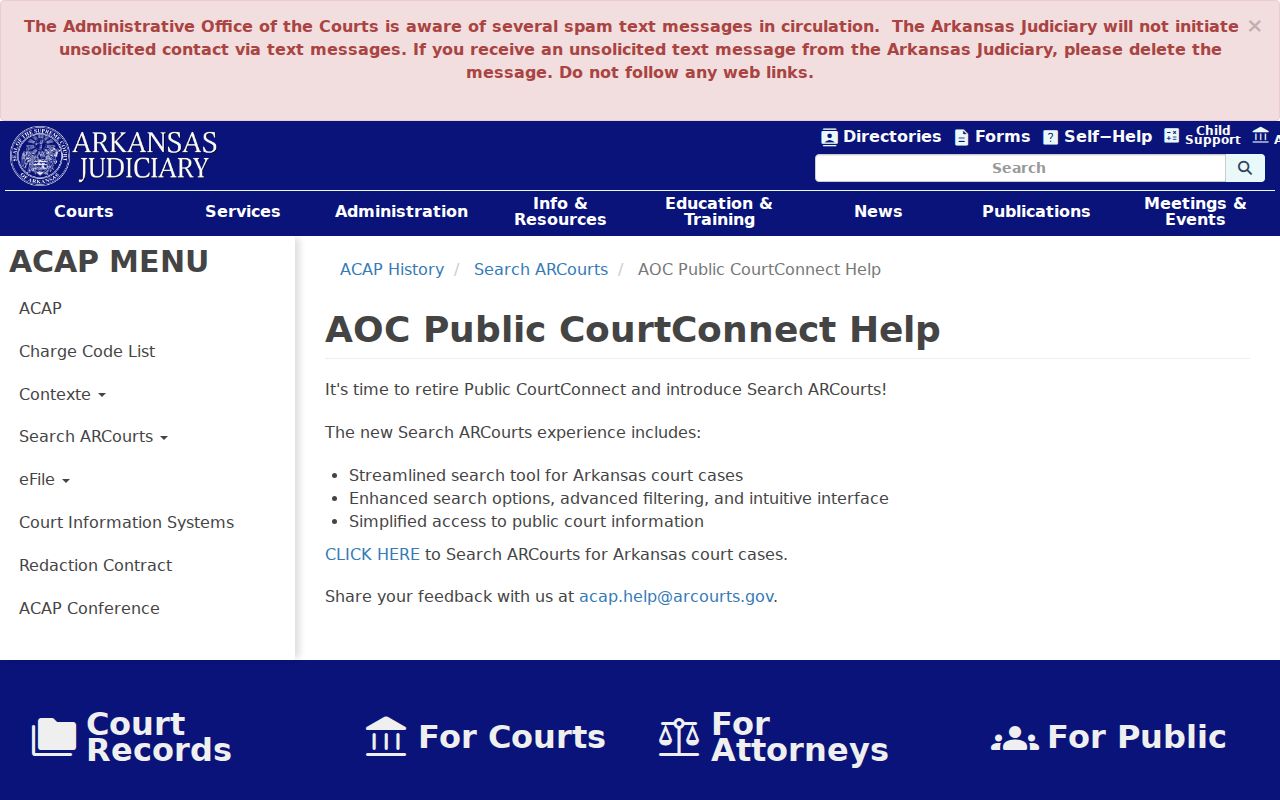
The official help page makes a better bookmark than an old CourtConnect result. The statewide public interface keeps changing.
Verify Fayetteville Voter Records
Arkansas VoterView confirms one registration, not a street roll. It requires first name, last name, date of birth, and county. A match can return registration status. Election-facing details may follow, such as precinct, polling place, districts, and a sample ballot. A miss proves nothing about residency. The Secretary of State's voter information page provides the official route into voter services.
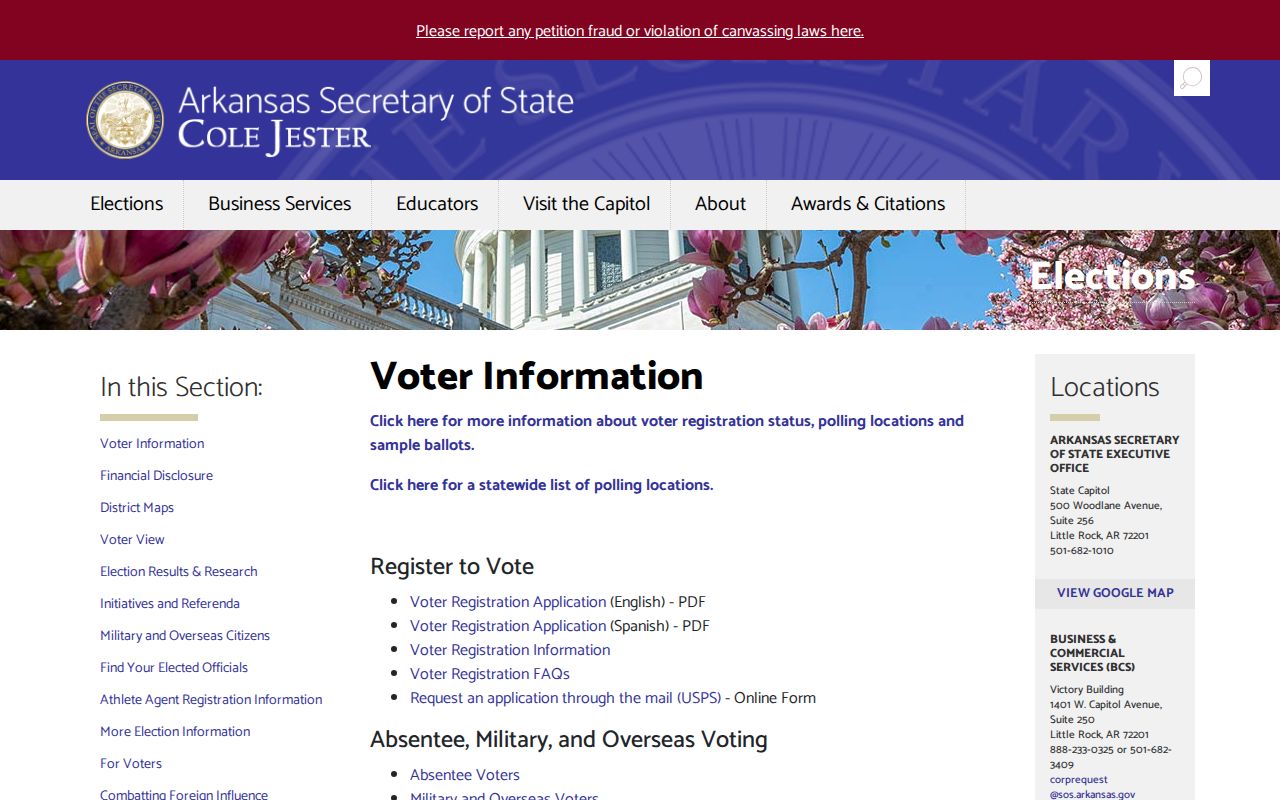
The state page supports personal verification. Broader lawful lists must go through election-record channels. Under Ark. Code Ann. § 7-5-109, county computerized lists carry names, addresses, and precinct numbers, with secure-voter addresses omitted. A focused extract can be requested from the Washington County Clerk or Election Commission, specifying the needed geography, fields, medium, and date. Participation never reveals ballot choices.
Fayetteville Vital Record Routes
The Arkansas Department of Health issues birth, death, marriage, and divorce records online, by phone, by mail, and in person. Identity and eligibility rules apply. Ark. Code Ann. § 20-18-305 and health regulations set those rules. Birth records open to the public after 100 years. Death records open after 50. A Fayetteville historical search adds another option: the Washington County marriage index for 1845-1941 at the Archives or the library.
Every ADH certificate order demands real specifics. Expect to give identity and relationship, record type, event names and date, event place, reason, signature, identification, payment, and delivery details. Mail applications go to Arkansas Department of Health, Vital Records, Slot 44, 4815 W. Markham, Little Rock, AR 72205. Telephone ordering runs at 866-209-9482, and the direct office number is 501-661-2336.
A marriage coupon confirms the reported event. A divorce coupon identifies an event and county, while the decree and pleadings stay with the Circuit Clerk. Before statewide registration, genealogy leans on church, cemetery, newspaper, probate, family, and delayed-registration sources. Never infer parentage or death from a namesake. A shared name is only a clue.
Fayetteville Heirs and Classmates
A resident lookup works best with one clear goal. Heirs can often be traced through probate, since a case file names the fiduciary plus any heirs or claimants. Start with Search ARCourts. Then order the official file from the Circuit Clerk. For family or address clues, the Fayetteville Public Library keeps an obituary index in its genealogy room, and local newspaper runs sometimes fill gaps. Confirm those details against probate, cemetery, or vital records before relying on them.
Classmates leave a different trail. The Grace Keith Genealogy Collection holds Fayetteville High School and University of Arkansas yearbooks. University Special Collections adds student materials, campus publications, photographs, and vertical files. Adoption files stay confidential. A birth-parent search must go through Arkansas's official adoption, reunion, or court process, not around a closed record.
Fayetteville Official Safety Records
Safety records need context. The Washington County detention roster is a custody snapshot, nothing more. A booking is not a conviction. Every result should be read with its date and legal status. For released-record questions, call Sheriff Records at 479-444-5785; clerks there can steer a request to the right file. The official Arkansas Division of Correction inmate search adds a second layer. It covers state custody only, not every local booking.
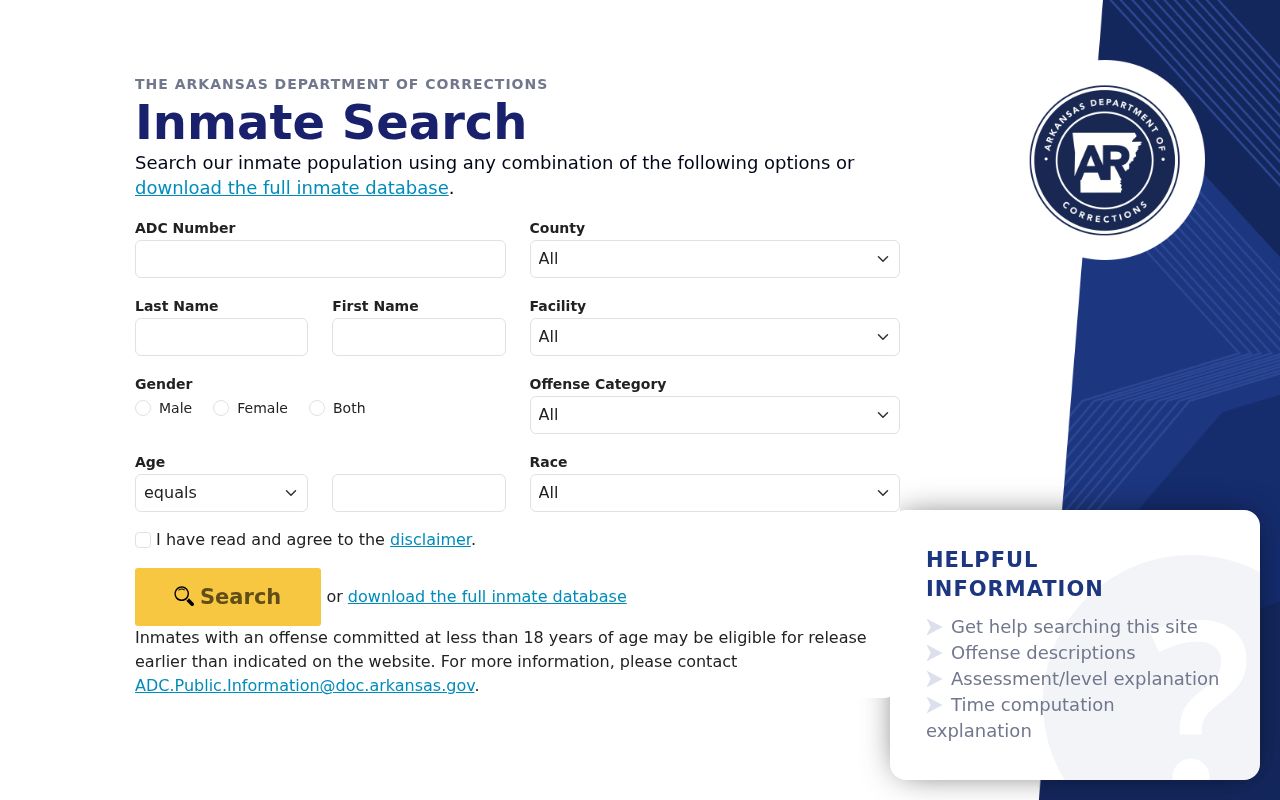
The search form's scope is limited. An absent result settles nothing about county detention, release, or an older court case. For a broader safety search, the Arkansas Crime Information Center registry publishes its own official listings. The registry carries a use warning that matters.
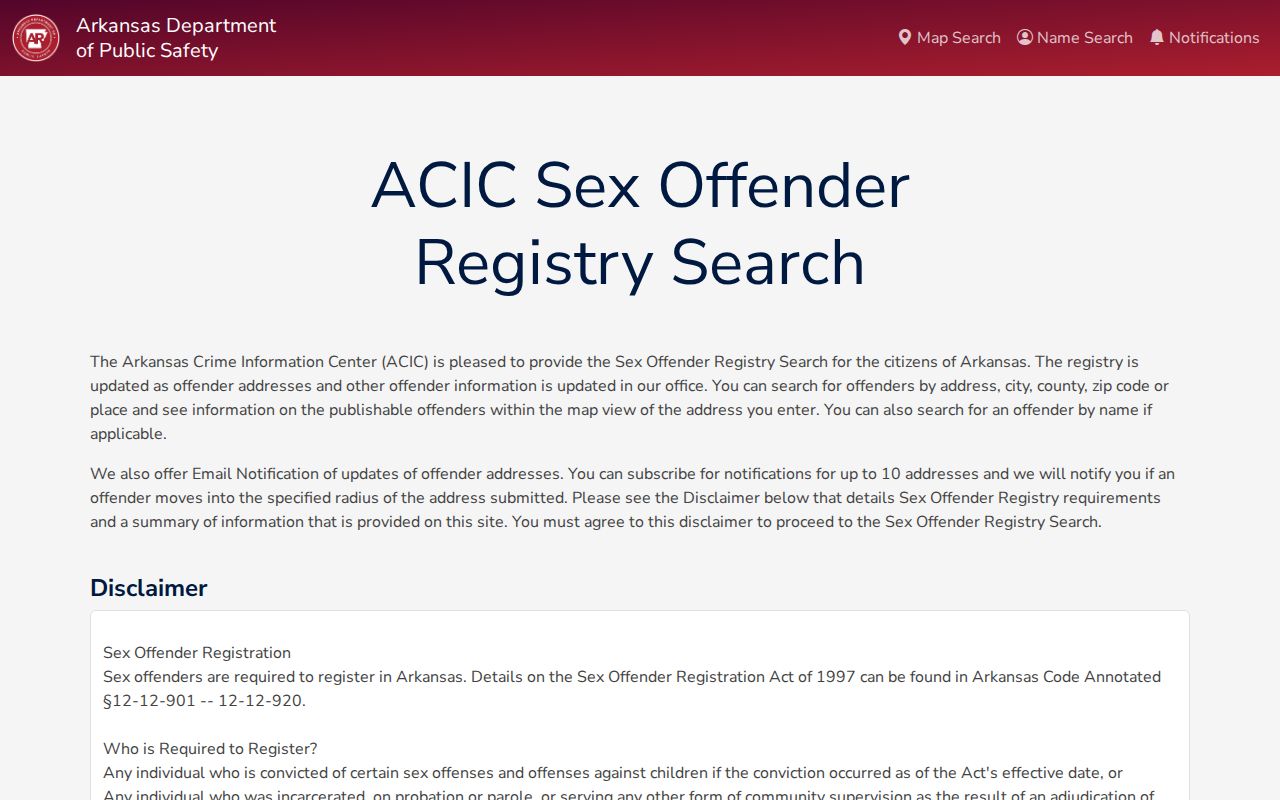
Note: The registry itself prompts users to verify current reported information and warns against unlawful action toward any listed person.
Fayetteville Lookup Request Fallbacks
Dead ends happen. When an index fails, try the custodian's other channels. The Circuit Clerk offers counter and phone guidance on land and court files. County Archives runs historical databases plus in-person access on Wednesdays from 9 a.m. to 3 p.m. The reading room closes from noon to 1 p.m. Fayetteville Public Library provides staff help, in-room databases, scanners, and microfilm readers. It also offers a paid research-request service.
City records missing from Civic Access can still be requested. Use Fayetteville's FOIA portal or go to the responsible office directly. An Arkansas Freedom of Information Act request should name the record, the date range, and the desired format. It should not ask staff to run an open-ended person search. Nor should it ask them to answer a research question.
Commercial compilations deserve caution. Their data can be stale, and they sometimes merge two different people into one entry. Treat them as unverified leads at most. If a public record is wrong, ask the office that produced it to correct the matter. That same custodian handles certified copies, record images, and files that seem to be missing.
Limits on Fayetteville Resident Lookup
Every official trail ends somewhere. Arkansas secure-voter law shields qualifying addresses under Ark. Code Ann. §§ 7-5-109 and 7-5-112. Vital certificates are restricted. Adoption, juvenile, sealed, and expunged court material is closed or limited, and federal law protects personal motor-vehicle information. A record that is public in one place does not lose its protection in another.
Sources also overstate households. No parcel, deed, voter check, or license record proves who lives at an address. An owner may live elsewhere. A registered-agent address serves a filing role. A professional credential may list only an office. A careful resident lookup states what each record actually confirms and stops at any protected boundary.
Lawful use. Fayetteville resident records are for lawful personal research. Never use a lookup to stalk, harass, threaten, intimidate or evade a protected address.